Introduction
A Story of an App Development
This document helps you understand the basic idea of uniqush-push by
telling an imaginary story of a group of app developers.
- Once upon a time, there was a group of developers building a weather report
app for mobile devices. They were from the open source community and
preferred open platforms, so Android was their first choice.
- The idea of their app was simple: send a weather report from their server to
their app every day.
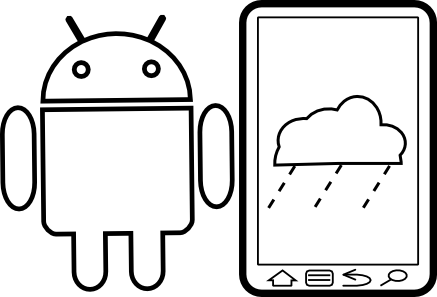
- On Android, sending a notification to an app is easy: Google provides a
cloud service — first GCM, now Firebase Cloud Messaging (FCM) — to help
developers send data from a server to an app.
- Developers push data to their apps by sending an HTTP request to that cloud.
- Empowered by FCM, the developers were happy: they didn't need to think about
the system the app ran on. Everything they had to do was gather the weather
data, connect to FCM over HTTP, and send it. Clean, easy, and little code.
- After several months, quite a few Android users were using the app. Our
developers, encouraged by this success, decided to expand to other
platforms.
- A lot of users carried phones from a certain fruit company — too popular to
ignore.

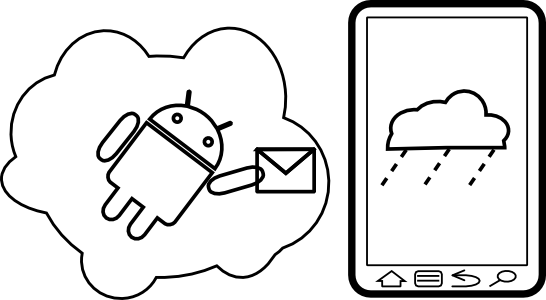
- The developers found that this company also provides a cloud service: the
Apple Push Notification service, or APNs. Again, they'd connect to APNs and
push data to it, and it would deliver the data to the device.

- But APNs speaks its own protocol, with its own authentication. The server
side had to change to support both APNs and FCM.
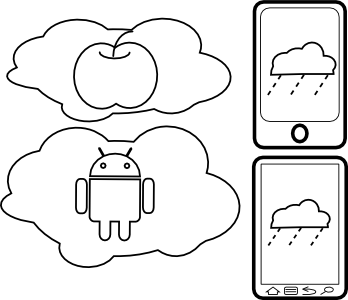
After adding APNs, the project manager wanted to support Kindle tablets too
— another cloud, specific to Amazon devices.
The developers grew impatient. Every new platform meant learning another
cloud's protocol, when all they wanted to do was decide what to push, not
figure out how.

- Finally, our developers found uniqush-push, which solved the problem.
- They no longer needed to know which cloud a device used. They just push a
message, and uniqush-push speaks to each cloud's own protocol on their
behalf.
- Running uniqush-push on their server, they could send one HTTP request and
reach any platform it supports.